

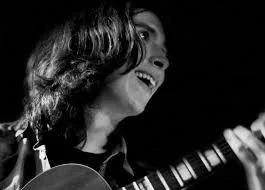
Edo Baroni, guitar
DGL Artists™ is currently routing select West Coast United States touring opportunities for August 2026, including:
Concert performances
University residencies
Lecture-recitals
Guitar masterclasses
Festival appearances
Student Q&A sessions
Interdisciplinary arts presentations
Ideal for:
Performing arts centers
Listening rooms
Wineries and cultural venues
Universities and conservatories
Guitar festivals
Arts and humanities programming
Lecture-recitals and interdisciplinary presentations
International Italian guitarist Edoardo “Edo” Baroni blends contemporary European jazz, cinematic solo guitar performance, improvisation, and melodic storytelling into an intimate and emotionally resonant concert experience.
Born in Brescia, Italy, Baroni began his musical studies with Luciano Poli before continuing his development under acclaimed jazz artists Sandro Gibellini and Roberto Soggetti. At just eighteen years old, he was one of only nine musicians admitted into the prestigious Conservatorio Luca Marenzio in Brescia, where he studied jazz guitar under renowned guitarist and educator Peo Alfonsi, longtime collaborator of Al Di Meola. He later completed both undergraduate and graduate degrees in jazz guitar with honors.
Alongside his performing career, Edo has remained deeply committed to music education and artistic mentorship through teaching appointments and interdisciplinary educational collaborations within the Italian conservatory system.
In 2022, Baroni released his debut solo album Dawn on the Clockbeats label, produced by acclaimed producer Dario Mollo. The recording introduced audiences to his lyrical solo guitar language, blending jazz improvisation, cinematic atmosphere, and contemporary European harmonic sensibility.
He followed with Songs (2023), expanding his artistic identity through original compositions and reimagined repertoire that fused jazz vocabulary with melodic storytelling and modern production aesthetics.
In late 2024, Baroni released BY HEART, his third solo album, continuing his exploration of intimate solo performance and emotionally driven composition while expanding his international touring activity throughout Europe and Japan.
In 2026, he released The Ash Wednesday Supper, again produced by Dario Mollo and released on Clockbeats. Developed following international touring connected to Expo 2025 Osaka and performances throughout Europe and Japan, the album reflects Baroni’s evolving artistic voice through atmospheric composition, improvisation, cultural reflection, and cinematic narrative expression.
As a performer, Edo combines technical precision with warmth, restraint, and emotional clarity. Drawing influence from Wes Montgomery, Django Reinhardt, Charlie Christian, Pat Metheny, Ralph Towner, and Al Di Meola, his performances create an immersive listening experience that connects jazz improvisation with Mediterranean lyricism and contemporary European composition.
Edo Baroni’s “Hapy’s Dance (A Night in Egypt),” from his newest release The Ash Wednesday Supper, is less a traditional jazz composition and more a cinematic solo guitar journey shaped by atmosphere, restraint, and tonal storytelling. Drawing from contemporary European jazz, modal improvisation, and Mediterranean harmonic color, Baroni creates a performance that feels deeply personal and visually evocative without ever becoming overstated.
Rather than relying on virtuosity for its own sake, Baroni allows space, resonance, and subtle harmonic tension to carry the emotional weight of the work. The result is a haunting and immersive listening experience where the guitar functions not simply as a solo instrument, but as a narrative voice capable of shifting between intimacy, mystery, and quiet intensity.
- Dr. John P. Horgeshimer
Performed by Edo Baroni (Solo Guitar)
In this masterful solo rendition of Charlie Parker’s bebop classic "Yardbird Suite," Italian guitarist Edo Baroni strips the tune down to its bones and rebuilds it with elegance, clarity, and precision. Performing entirely unaccompanied, Baroni balances harmonic depth with melodic spontaneity, offering a deeply personal interpretation of one of the most iconic tunes in the jazz canon.
Where most renditions race through changes, Baroni lets the tune breathe—his phrasing shaped by a keen sense of dynamics and voice leading. The head is played with crystal-clear articulation, and the improvisation that follows is rich in bebop vocabulary, tastefully interwoven with modern colors and reharmonization techniques.
This performance isn’t just a technical showcase—it’s a conversation with the lineage of jazz. A nod to Bird, filtered through Baroni’s own voice.
“Solo guitar is about storytelling,” Edo says. “In a piece like this, the story’s already strong—you just have to tell it honestly.”
- Dr. John P. Horgeshimer
Performed by Edo Baroni (Solo Guitar)
In this intimate solo performance, Edo Baroni pays homage to jazz guitar legend Wes Montgomery with a heartfelt rendition of "Mi Cosa". Originally featured on Montgomery's 1965 album Bumpin', "Mi Cosa" is a composition that showcases Montgomery's signature blend of melodic sophistication and rhythmic nuance.
Baroni's interpretation captures the essence of the original while infusing it with his unique stylistic sensibilities. His nuanced phrasing and dynamic control bring a fresh perspective to the piece, highlighting the timeless quality of Montgomery's composition. The performance is a testament to Baroni's deep understanding of jazz guitar tradition and his ability to convey emotion through intricate musical expression.
This rendition not only honors Montgomery's legacy but also demonstrates Baroni's prowess as a solo guitarist, capable of delivering complex harmonic structures with clarity and grace.
- Dr. John P. Horgeshimer